

“Hunger Games” style competition threatens the future of organ donation and transplantation
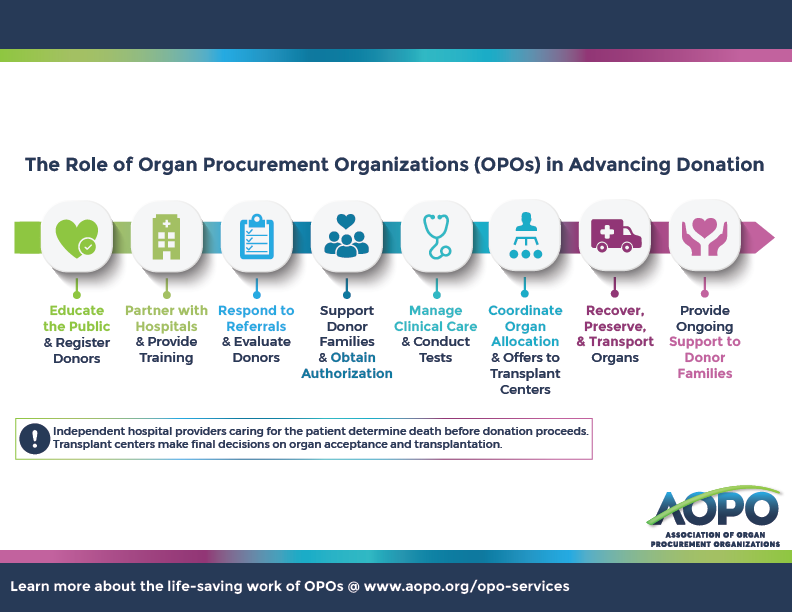
An evaluation and competition system created by the Centers for Medicare and Medicaid Services (CMS) could lead to 42% of Organ Procurement Organizations (OPOs) being automatically decertified in 2026. There are currently 55 OPOs across the country. Each is responsible for facilitating organ recovery in their local hospitals, communicating with the families of potential donors, alerting transplant centers when organs become available, and coordinating the processes of donation.
“This slash-and-burn campaign will disrupt donation and transplant throughout the country, impose unsustainable burdens on the remaining OPOs, and result in fewer available organs, leaving tens of thousands of patients vulnerable and doctors without their trusted OPO partners,” argue some of the groups suing to stop the change.
Each OPO has an assigned geographic donor service area. For ConnectLife, that area covers the eight counties of Western New York. Since Congress passed legislation setting up the service area system in the 1980s, a handful of OPOs have merged or closed, but there has never been a widespread shutdown of multiple OPOs.
The new evaluation system calls for OPOs to be ranked on two measures — donation rate and transplantation rate — and categorized into tiers based on national averages. OPOs in Tier 1 would be automatically recertified, those in Tier 2 would compete with others for their service areas, and those in Tier 3 would be decertified. This system ignores the variations between the geographic areas and communities served, the importance of relationships with local hospitals, and the longstanding collaborative efforts between OPOs across the country.
The CMS rule “throws the non-profit community based OPOs into a cutthroat, iterative Hunger-Games-style competition where only the top are guaranteed ‘organizational survival’,” according to a lawsuit by New England Donor Services, Gift of Life Michigan, We Are Sharing Hope SC, and Donor Network of Arizona. “Future cycles of this rank-and-yank policy will reduce the field further, until the whole system is reduced to less than a handful of national OPOs,” they argue.

Through the localized OPOs, the United States has built a system with the highest organ donation rate of any country. Less than one percent of deaths occur in ways that allow for organ donation, but the number of organs donated and lives saved have steadily climbed over decades. In 2025, there were 16,551 deceased donors in the U.S. – more than twice as many as in 2010 – saving 40,054 lives.
In addition to ignoring overall improvement across the country, the new evaluation system also relies on flawed metrics. While donation rates are important, they reflect multiple factors beyond the control of OPOs, including the demographics in a service area and how many potential donors are referred by local hospitals. Transplantation rates are affected by the policies set by transplant centers and the choices of their clinicians: An OPO can recover an organ, but it will only be transplanted if a surgeon accepts the organ for a matched patient within a narrow timeframe.
ConnectLife is among the OPOs and donation advocates from around the country working to raise these concerns with CMS and elected officials. Recognizing the need for continued improvements and accountability, the Association of Organ Procurement Organizations has been developing independently validated, data-driven performance measures that accurately reflect OPO processes.
Read an Op-Ed by surgeon and former U.S. representative Dr. Larry Bucshon about the risks to the organ donation system: https://thehill.com/opinion/healthcare/5877407-cms-opo-performance-metrics-flaws/
Read more about the performance measurements developed by the Association of Organ Procurement Organizations: https://aopo.org/opos-advance-project-improving-performance-measurement-and-accountability-to-save-lives/

Comments